How to Spot Real vs. Fake Crystals: A Guide for Metaphysical Shop Owners
For metaphysical shop owners, crystal healers, and spiritual entrepreneurs, your shop’s reputation is your most valuable asset. When customers walk into your store or browse your online shop, they aren’t just buying beautiful stones—they are seeking the authentic energy of nature.
Selling a counterfeit or chemically altered crystal, even by mistake, can shatter that hard-earned customer trust overnight. However, as the crystal industry booms globally, the market has become flooded with clever imitations, dyed glass, and lab-synthesized replicas.
How can a retailer ensure their inventory is genuine? As a professional real gemstone supplier with over 20 years of factory-direct experience, HooJewels has put together this comprehensive guide to help you identify authentic crystals wholesale and protect your business from common market scams.
The 4 Most Common Types of Fake and Treated Crystals
Before you can test your inventory, you need to understand what you are up against. Counterfeiters use several methods to mimic the look of premium bulk stones and crystals.
1. Dyed and Heat-Treated Crystals
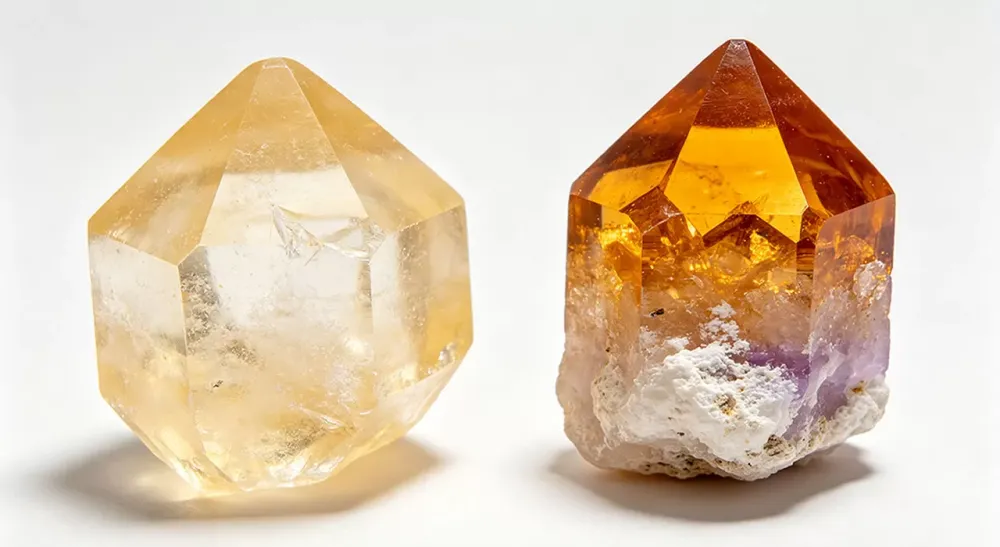
This is the most common form of enhancement. Low-grade, inexpensive stones like agate or howlite are often chemically dyed into vibrant neon blues, pinks, and purples to mimic rarer minerals. Another classic example is baked amethyst, where low-quality purple amethyst is blasted with extreme heat until it turns burnt orange, then sold falsely as natural Citrine.
2. Glass and Melted Quartz
Many perfectly clear or brightly colored stones on the market are actually just glass. “Smelt quartz” or “cherry quartz” are often manufactured by melting down quartz sand mixed with coloring agents. While they look flawless, they lack the atomic structure and energy of natural crystals.
3. Resin and Plastic Imitations
Plastic and resin are frequently used to counterfeit lightweight materials like Amber, Jet, or Turquoise. This method is also common in cheap, mass-produced crystal carvings where intricate details are molded rather than hand-carved from genuine stone.
4. Lab-Grown Crystals
While lab-grown crystals (like synthetic quartz or opal) share the same chemical formula as natural stones, they are created in a factory within days rather than deep in the earth over millions of years. For the metaphysical community, these lack the natural earth energy your customers desire.
5 Practical Tests to Verify Authentic Crystals Wholesale
When you receive a large shipment from wholesale crystal distributors, you don’t need a PhD in geology to run a quick quality check. Use these five simple, hands-on tests to screen your bulk orders:
1. The Temperature Test
Natural crystals and gemstones conduct heat poorly. When you touch a real crystal to your skin (like your cheek or forehead), it will feel distinctively ice-cold. Glass or plastic imitations will feel lukewarm or will quickly warm up to match your body temperature.
2. The Imperfection and Bubble Test
Grab a jeweler’s loupe or a magnifying glass and inspect the stone’s interior.
- If you see perfectly round air bubbles, it is 100% glass.
- Natural stones grow with natural inclusions, internal fractures (ice cracks), color zoning, and tiny mineral deposits. Perfection is often the first sign of a fake.
3. The Mohs Hardness Scratch Test
Every mineral has a specific hardness level on the Mohs scale. For example, Quartz (including Rose Quartz, Amethyst, and Clear Quartz) has a hardness of 7. It can easily scratch a piece of glass (hardness of 5.5) or a copper coin without being damaged itself. If a knife blade easily scratches your quartz point, it is likely glass or plastic.
4. The Weight Test
Natural minerals have a high density, giving them a satisfying “heft” or weight when held in your hand. Plastic and resin replicas will feel noticeably light, hollow, or cheap compared to their size.
5. The UV Light Test
Investing in a simple UV (ultraviolet) flashlight can save your business thousands of dollars. Many treated, dyed, or resin-filled crystals will show a strong, unnatural fluorescent glow under UV light due to the synthetic dyes or glues used during manufacturing.
Counterfeit Red Zones: High-Risk Crystals to Watch Out For
Certain high-demand crystals are faked far more often than others. Keep an extra sharp eye on these three varieties:
- Citrine: Natural citrine is rare and features a pale, uniform champagne-yellow or smoky-honey hue. If you see a cluster with a chalky white base and deep, burnt-orange tips, it is heat-treated amethyst.
- Malachite: Real malachite features beautiful, swirling, irregular green and dark green bands. Fake malachite (usually made of plastic or clay) has repetitive, uniform, and harsh black-and-green stripes that look printed.
- Turquoise: Due to its scarcity, true turquoise is highly expensive. Much of the cheap turquoise sold in bulk is actually Howlite or Magnesite dyed blue.
How to Secure 100% Genuine Inventory from the Source
The absolute best way to avoid fake crystals is to stop trying to hunt for the cheapest price on unregulated platforms. To safeguard your shop, follow these industry standards:
- Partner with Verified Crystal Warehouses: Deal directly with established suppliers who own their manufacturing facilities and maintain long-term relationships with global mining zones.
- Look for Transparency: A reliable supplier will openly tell you if a stone is natural, stabilized, or heat-treated. Transparency is the hallmark of a professional partner.
- Insist on Independent Lab Certifications: For high-value gemstones and large statement pieces, ensure your wholesaler can provide official testing reports from third-party gemological laboratories.
Partner with a Trusted Real Gemstone Supplier
At HooJewels, we understand that your success is our success. With two decades of expertise as leading wholesale crystal dealers, we guarantee that our products are 100% authentic, ethically sourced, and factory-direct.
We offer an easy, low-risk way to expand your shop’s inventory with our premium selection of raw minerals, tumbled stones, hand-carved shapes, and natural crystal bracelets.
Protect your brand and delight your customers with the real power of nature.
👉 Explore HooJewels Certified Bulk Crystals Wholesale Catalog Now